

Seven decades have been dedicated to exploring the sky. Together, we have ventured into the ninth realm.
From the "two bombs and one satellite" to manned spaceflight, from lunar exploration to interstellar journeys, China's space program is advancing towards the deep space with a mighty momentum. With the "15th Five-Year Plan Proposal" clearly stating the need to accelerate the construction of a space power, commercial spaceflight, as a typical representative of new productive forces, is accelerating the reconfiguration of the industrial landscape.
As the demand for reusable rockets and large-scale satellite networking enters a high-frequency launch cycle, the lengthy mold-making period and high material loss of traditional manufacturing are unable to meet the strict requirements of "high reliability, low cost, and fast response" in the present era. Technological innovation in manufacturing has become the key to breaking the deadlock. Metal 3D printing, as a revolutionary technology for industrial machines, has become the norm for the research and development, trial production, and batch production of aerospace components.
TSC, with its profound technical accumulation, is writing a "fast, efficient, good, and economical" practical answer in this wave, providing highly competitive overall solutions for commercial spaceflight.
Practical verification: Assisting in the development of deep blue aerospace rocket engines
TSC, with its full-link metal 3D printing technology, deeply empowers deep blue aerospace in its innovative practices in cutting-edge fields such as reusable launch vehicles. Since reaching the cooperation in 2023, it has deeply participated in the research and batch production of multiple rockets of deep blue aerospace.
Using equipment such as LiM-X400 and LiM-X800H, various key components were successfully printed. The finished products have high dimensional accuracy, excellent performance, and good consistency, significantly improving production efficiency and product quality while effectively reducing manufacturing costs.
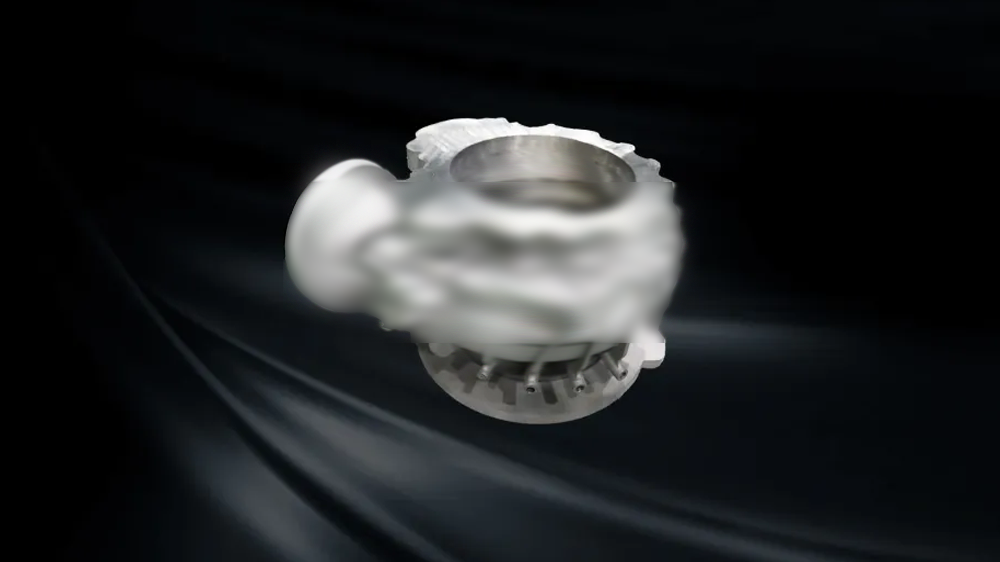
The rocket engine shell components delivered by our company
Printing equipment: LiM-X400
Single-piece size: approximately 450mm × 350mm × 250mm
Printing material: high-temperature alloy (GH4169)
Our company's cooperation with deep blue aerospace is an illustration of how metal 3D printing technology empowers commercial aerospace. As commercial rockets continue to evolve towards higher thrust and recyclability, the large-scale and integrated nature of components has become an irreversible trend. Facing this challenge, TSC, with its forward-looking equipment layout and profound technical accumulation, provides systematic solutions from "points" to "areas".
Large size: Integrated structure, simplification of complexity
The trend of large-scale commercial rockets and aircraft prompts metal 3D printing equipment to continuously develop towards larger and super-metric dimensions. Currently, TSC has two-meter forming capabilities, and the LiM-X2000H+ equipment has a forming size of 2000mm × 2000mm × 2700mm, capable of accommodating 55 lasers, meeting the requirements for integrated forming of large-scale and oversized components, providing a reliable industrial machine for the additive manufacturing of large commercial rockets.
The key components of the aerospace engine, such as the vaned ring, printed by our company, have a diameter of 1470mm. The entire component is of a composite impeller structure, with numerous thin and small blades, making the processing extremely difficult. Using the laser selective melting technology, large-sized and complex components can be integrated and formed as a whole. The finished product has a dense surface without defects, no welding points in the connection structure, is uniform and consistent as a whole, and has excellent performance. The material used is a high-temperature alloy (GH3625), ensuring its normal operation under high-temperature, high-pressure, and high-speed airflow conditions. The outer surface is evenly distributed with strengthening ribs to increase mechanical properties such as strength and stiffness.
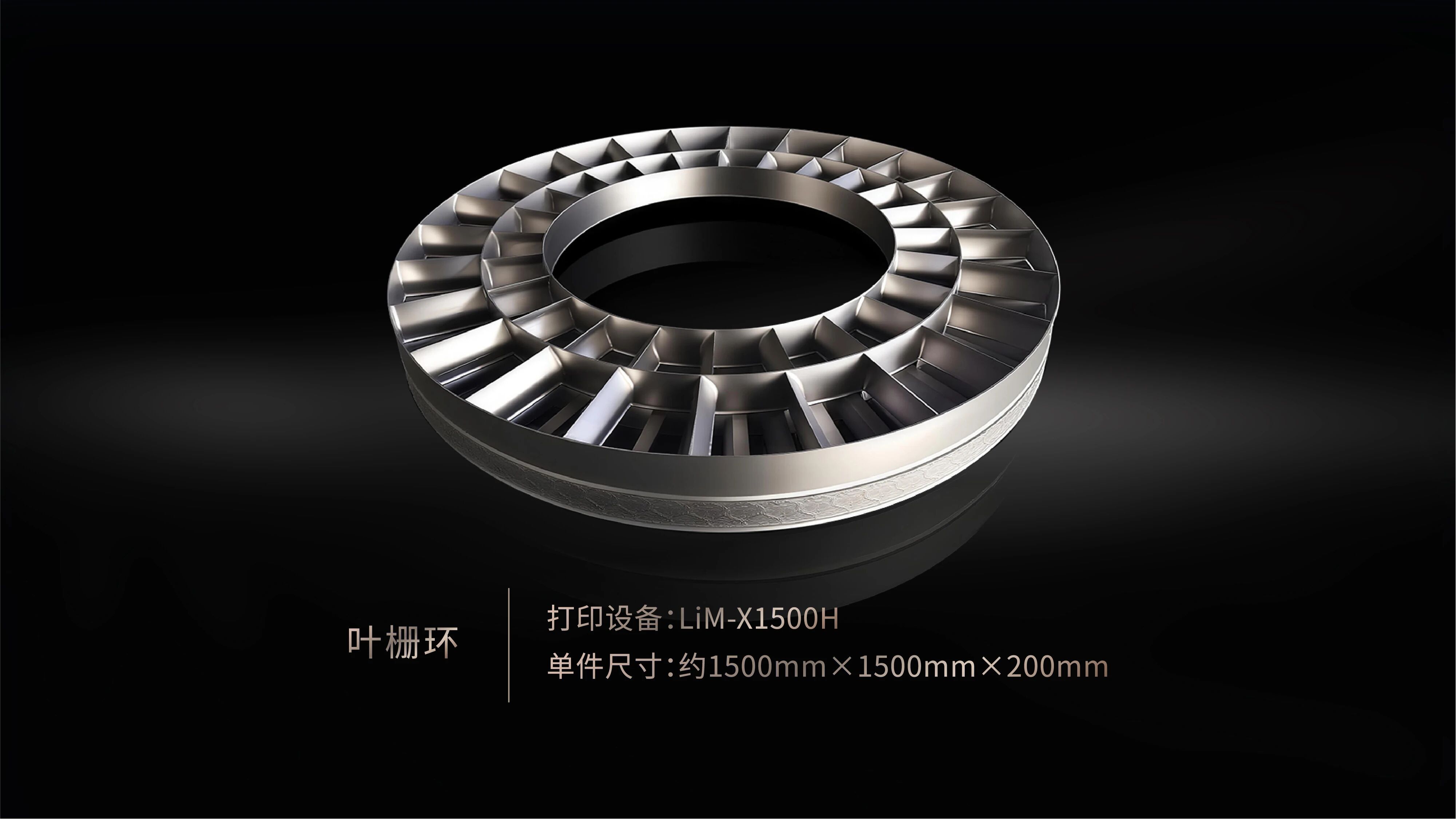
This part was formed by the LiM-X1500HF flight printing equipment. It was manufactured in 20 hours of laser printing, demonstrating TSC's high-quality and efficient production capacity for large-sized aerospace components.
The key component of the aircraft engine, the casing (φ715mm×300mm), printed by the LiM-X800H equipment, uses a high-temperature alloy material. It is an overall ring-shaped structure with large dimensions and complex shapes, featuring thin walls and weak rigidity. The final product has excellent fluid dynamics performance, high strength, and good durability.
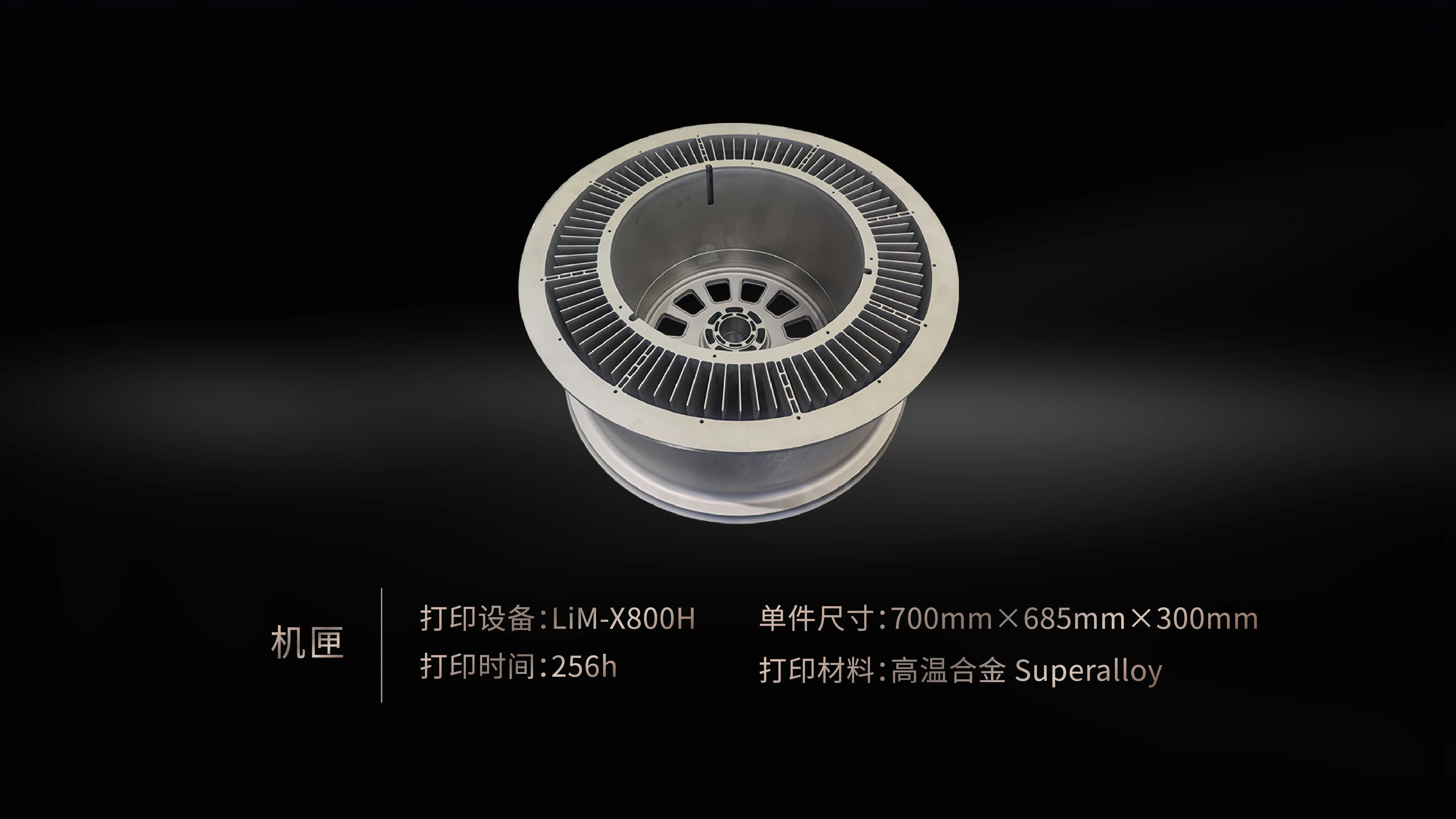
3D printing directly forms the parts, overcoming the processing difficulties of high-temperature alloys and other high-strength materials in traditional processes, simplifying the cumbersome processing procedures, significantly accelerating the speed of component research and development and trial production, and enabling rapid iteration of design schemes.
Precision and Artistry: Between the Micro and the Macro, Dominating the Skies
The lightweight demands of satellites and precision instruments have promoted the widespread application of lattice structures and thin-walled designs.
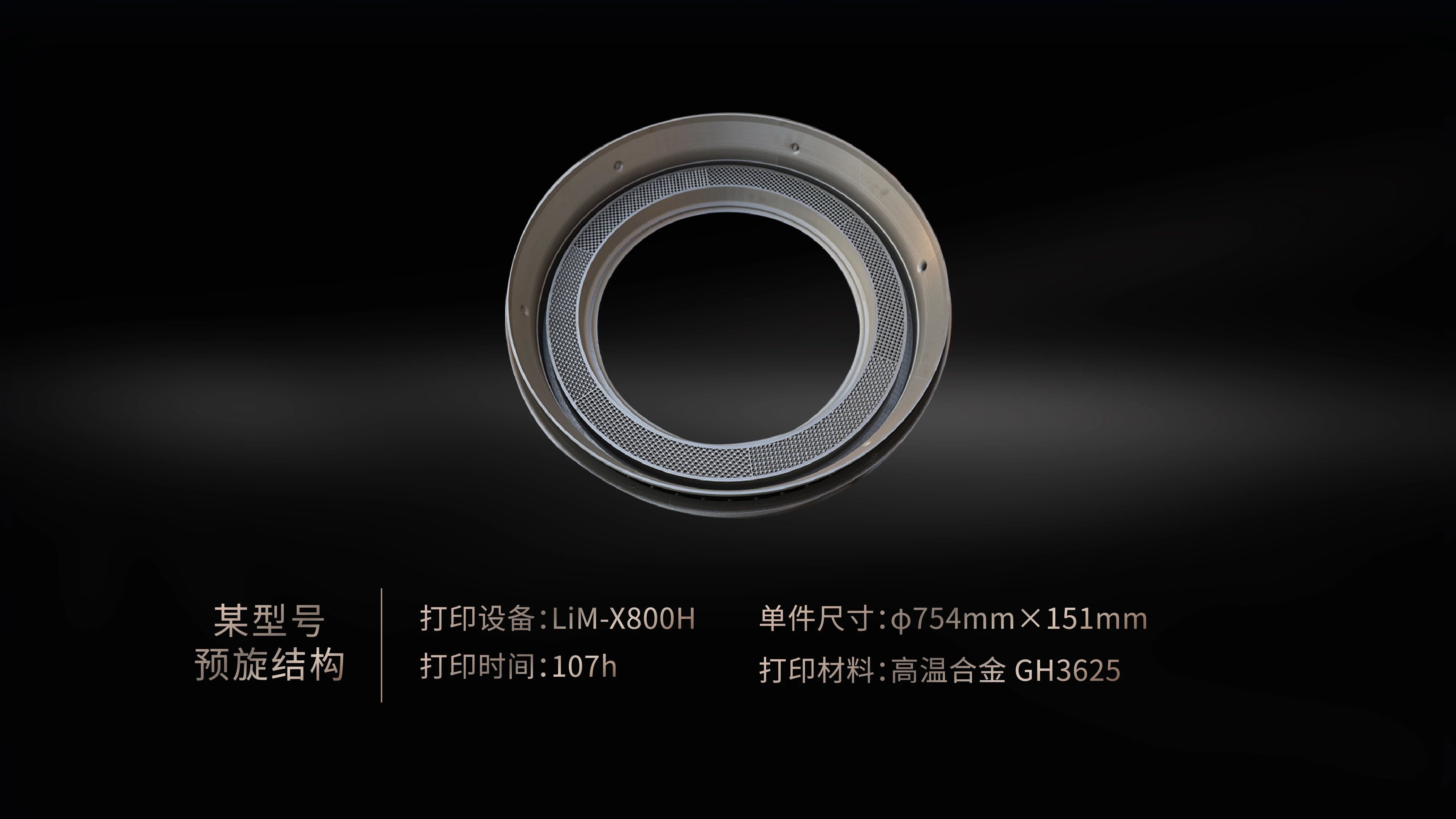
The LiM-X800H equipment manufactured the pre-rotating nozzle of the high-temperature alloy aircraft engine (φ754mm×151mm). This part adopts a large-volume lattice structure design, precisely removing the solid structures in non-critical areas to achieve lightweight goals. The precise lattice structure provides excellent energy absorption characteristics for the pre-rotating nozzle, making it particularly outstanding in dissipating the impact and shock loads brought by the high-speed airflow of the engine, providing reliable performance guarantees for aerospace critical components.
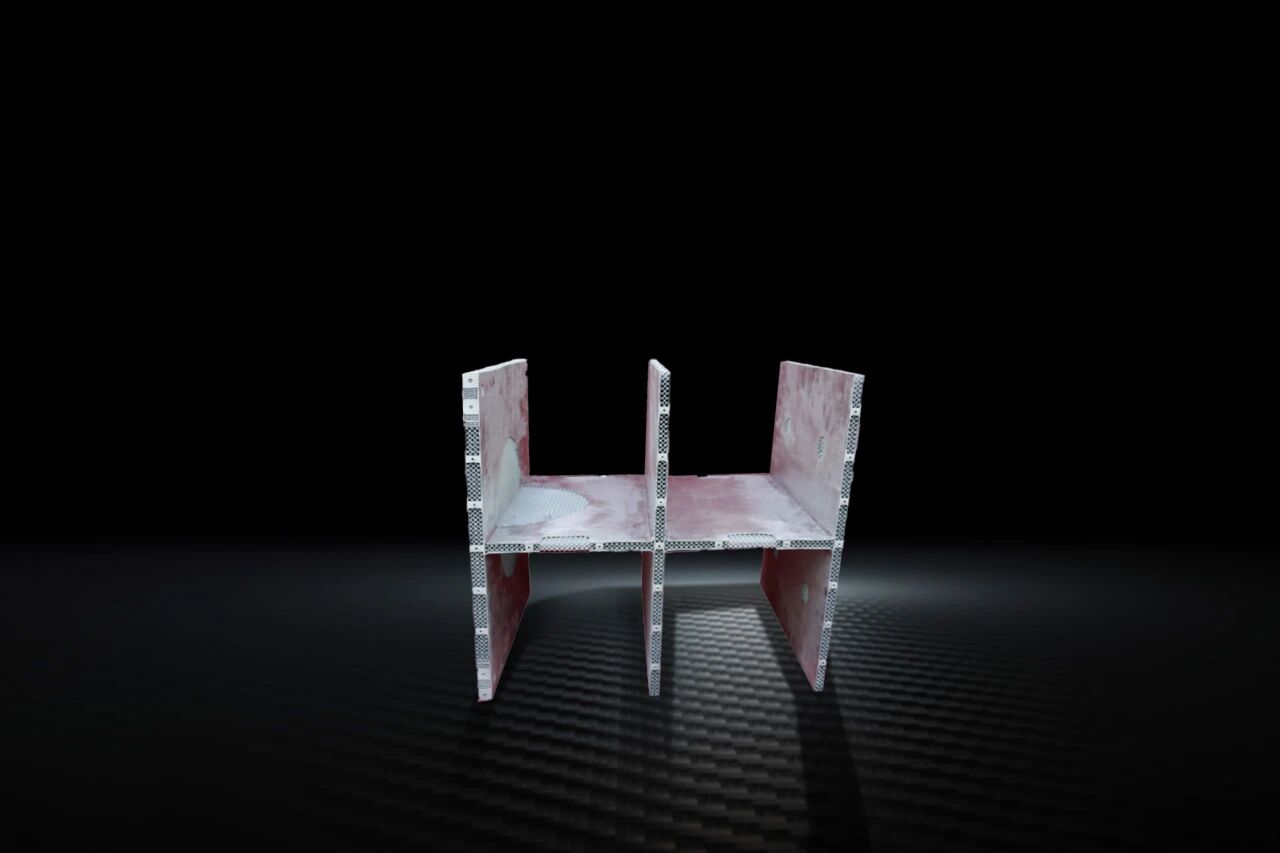
The main structure of a certain satellite, made of aluminum alloy, overcame the problem of large plane and large-size deformation cracking by adopting a typical thin-walled sandwich structure design: thin-walled panels + lattice core. This design enables rapid lightweighting of the components and has advantages such as high strength, good plasticity, fatigue resistance, and sound insulation and heat insulation. Based on metal 3D printing, the thin-walled sandwich structure can be integrated and formed as a whole, with the internal lattice structure intact, uniform in thickness, and precise and reliable.
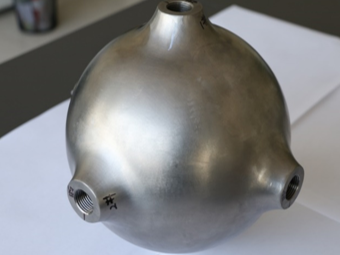
A satellite node ball of a certain space station, the inner cavity adopts a lattice structure to meet the requirements of integrated lightweighting, reducing by 40% compared to the original design. While shortening the production cycle, the cost is reduced by 30%. A hollow lattice structure of 200mm×200mm×200mm printed with approximately 0.5kg of titanium alloy can withstand a pressure of over 100kg.
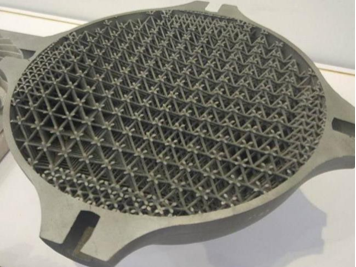
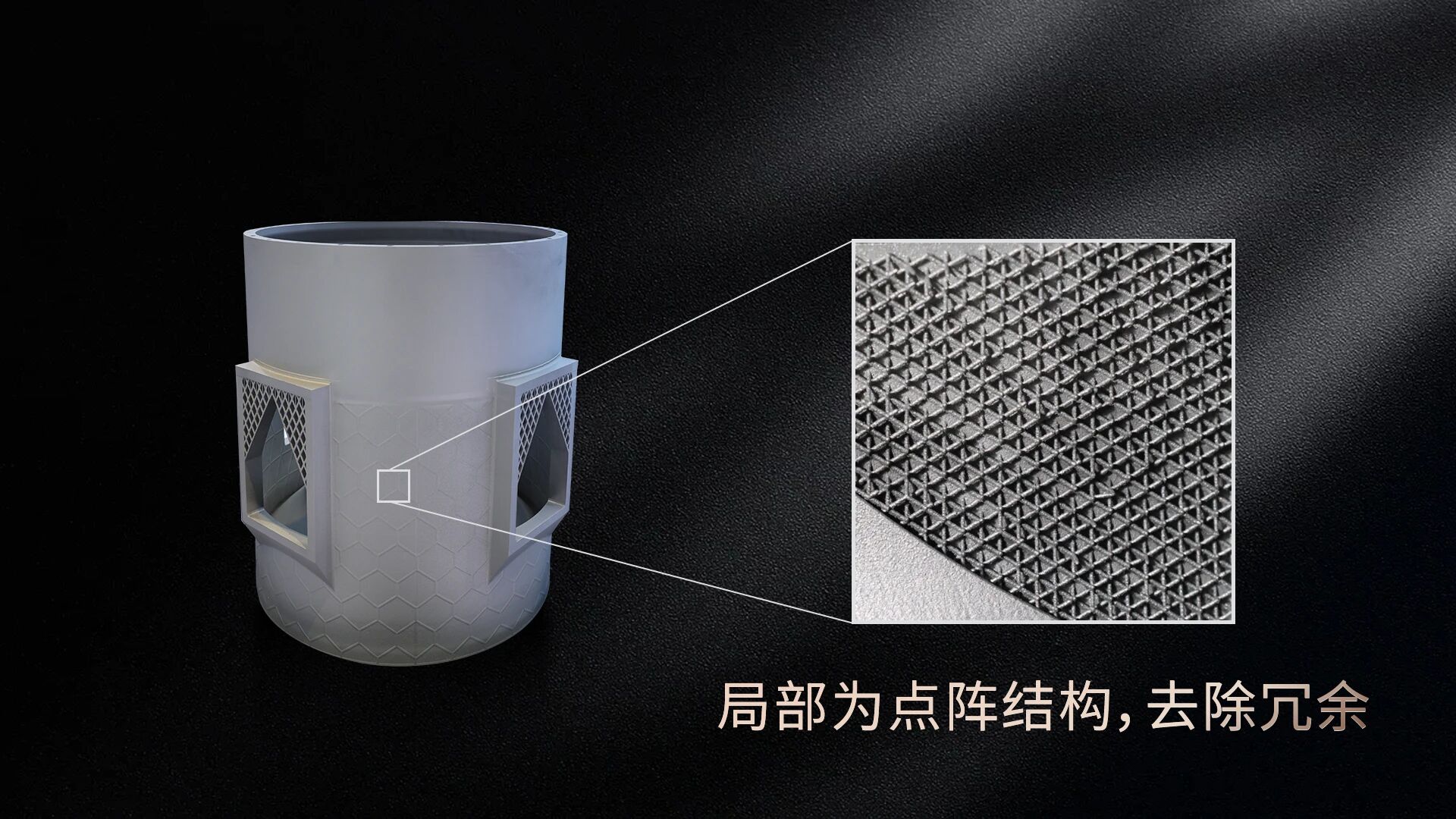
The LiM-X650 equipment's integrated forming of aerospace compartments uses lightweight and high-strength aluminum alloy materials for printing. Through topology optimization, the structural performance of the parts is enhanced, and the redundant parts are removed to achieve lightweighting requirements. The high-strength aluminum has the characteristics of low density and high strength, but there are also problems such as low density and a high tendency for parts to crack during printing. Through comprehensive optimization of process parameters, the pain points and difficulties in the integrated manufacturing of high-strength aluminum parts for large-sized and complex structures have been solved. The printed products have a good appearance effect.
Multi-process: Combined solutions, breaking the single
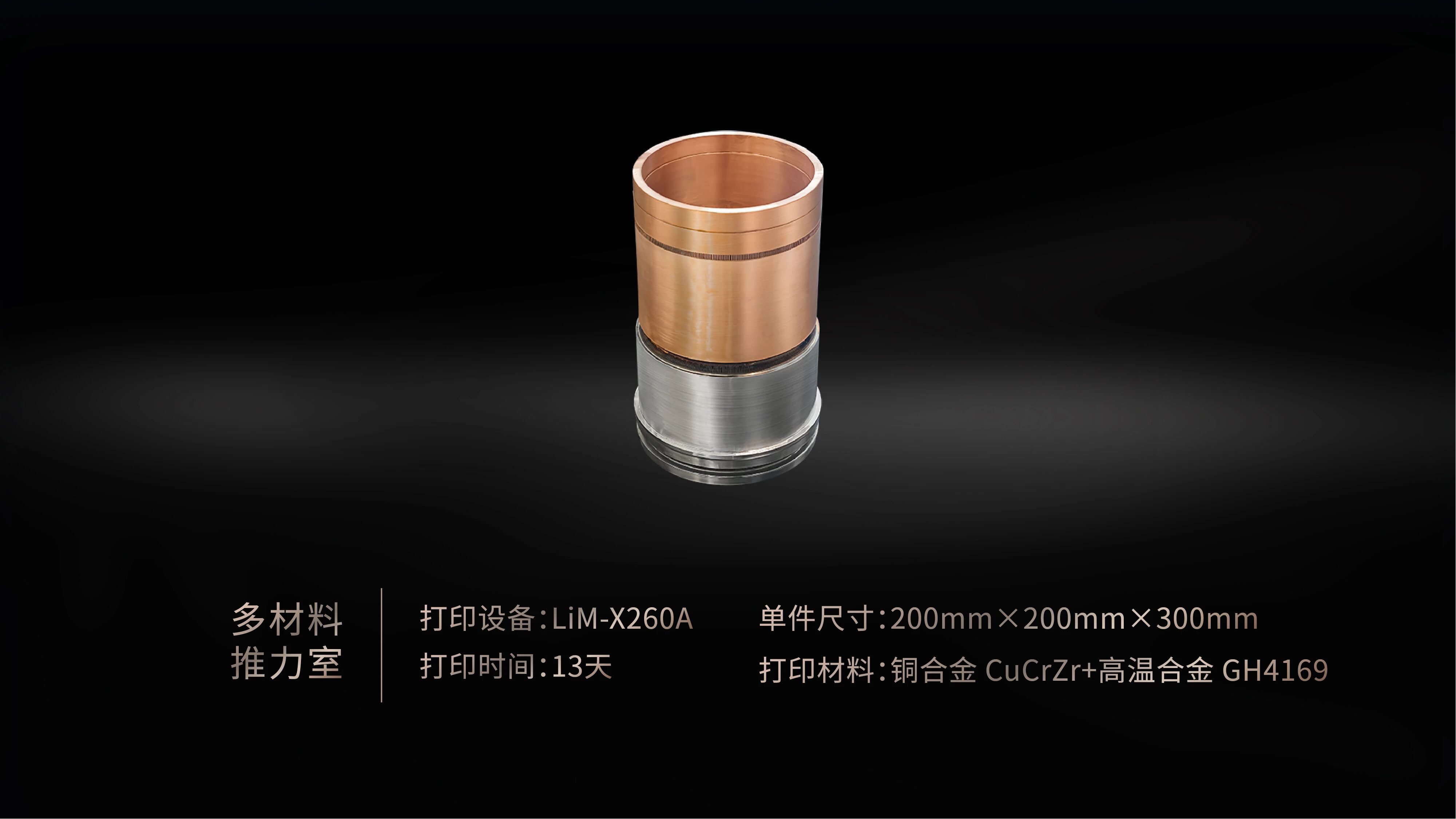
Special components for commercial aerospace often need to be made by coupling multiple materials, with different priorities for process and performance. TSC combines multiple alloys and processes for printing to precisely respond. Taking an aircraft engine thrust chamber as an example, its internal flow channels are fine and there are many thin-walled structures, and the control of rotational body deformation is difficult. First, the laser selective melting technology is used to complete the integrated forming of copper alloy (CuCrZr) to ensure high thermal conductivity; then, through laser cladding technology, a high-temperature alloy (GH4169) cladding layer is added to the outer surface, making it have both high strength and high-temperature resistance. The final product not only has excellent thermal conductivity but also meets the structural strength requirements. This "one component, dual performance" manufacturing logic provides a second level of reliability guarantee for commercial aerospace components in extreme conditions.
Excellent performance: Control of shape and form, quality improvement
Aerospace parts have increasingly higher requirements for structural design, and the requirements for the forming quality of components are more stringent.
An important component of a turbojet engine, the tail nozzle, has an envelope size of 500mm×870mm×2880mm, with many internal flow channels and complex rotating body deformation control difficulties. The laser selective melting + subtractive forming method is used for manufacturing, taking 720 hours to complete, and the final product meets the performance requirements of forgings.
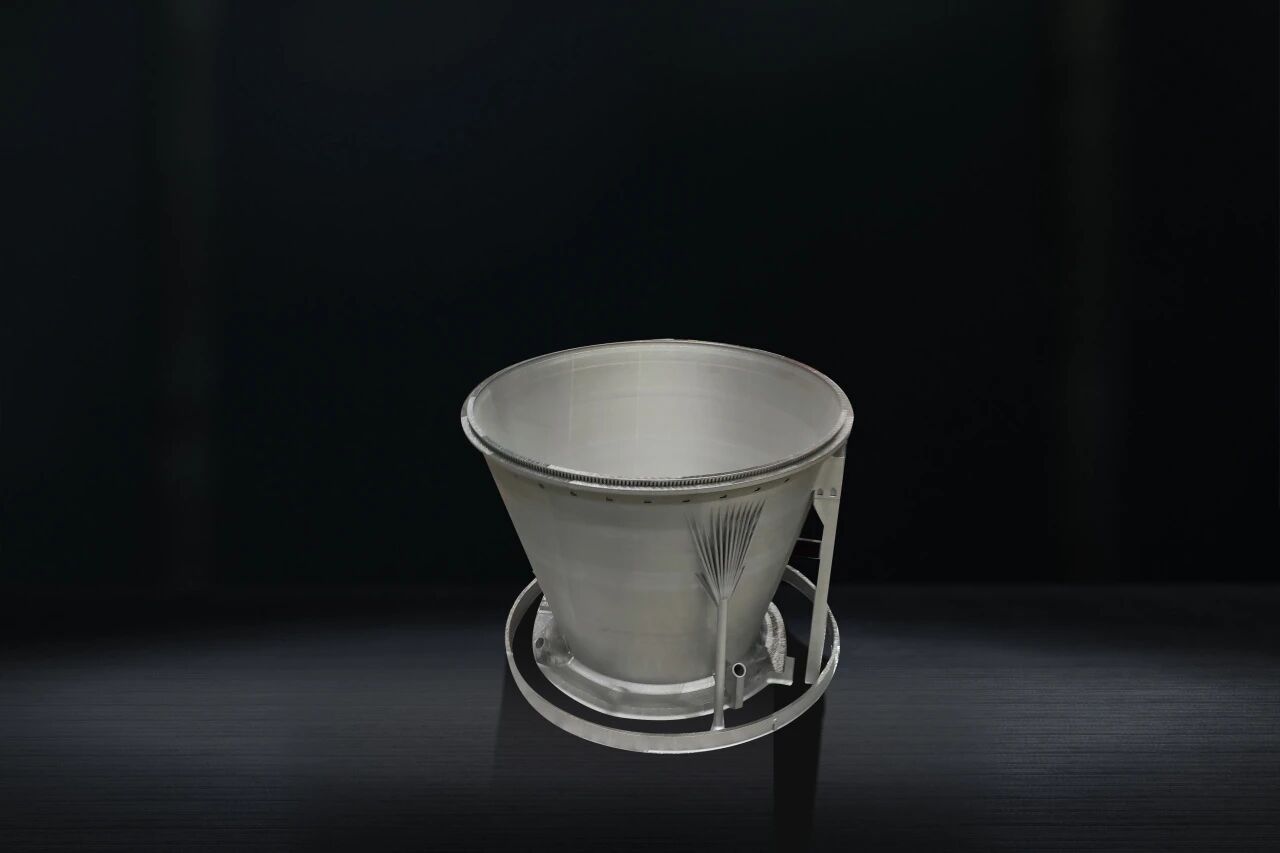
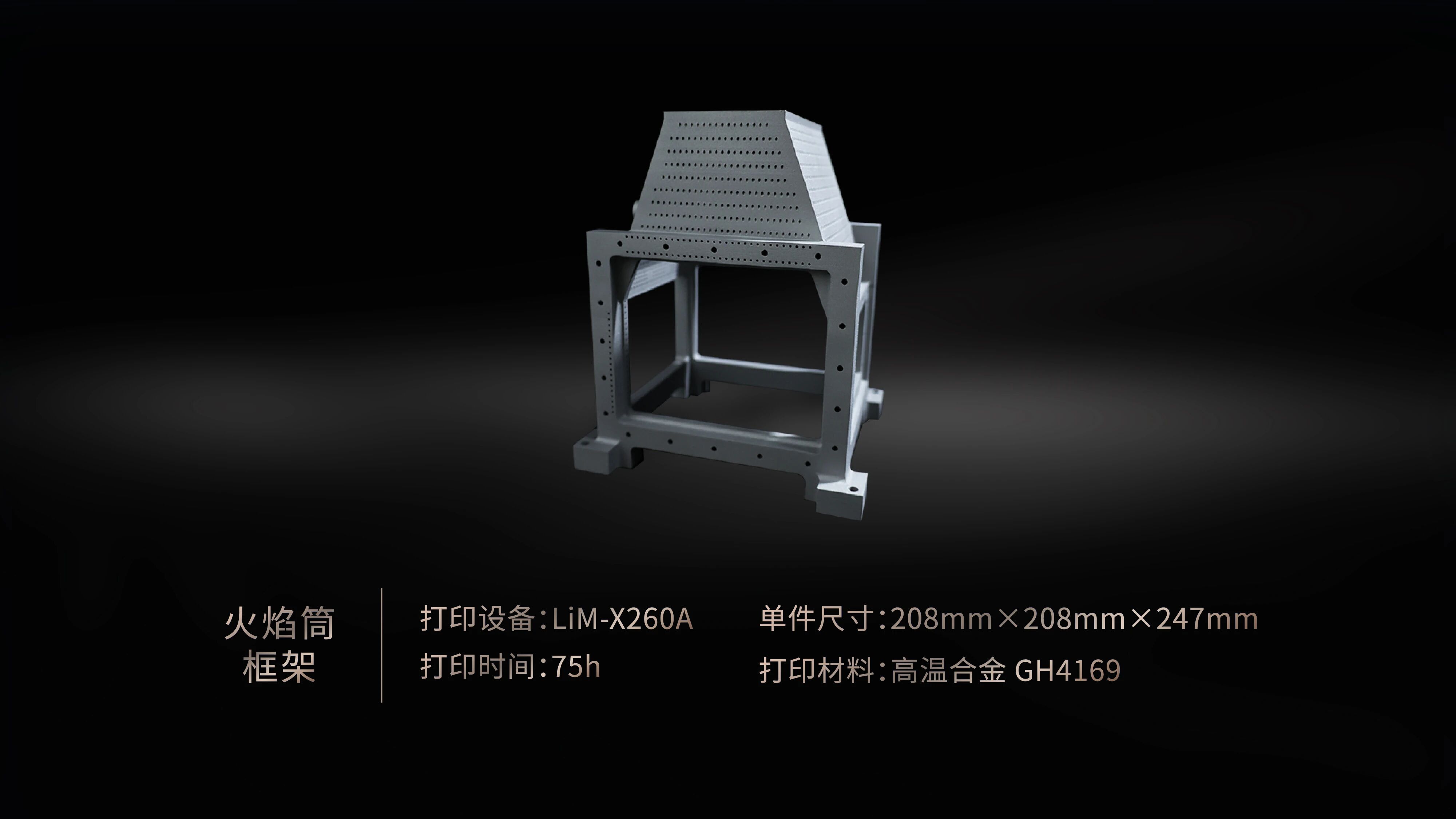
The flame tube frame printed by LiM-X260A is an overall thin-walled structure. There are a large number of air film cooling holes distributed in the thin-walled areas. It is formed as a whole without any loose cracks or defects, and effectively controls the deformation amount.
Witnessing Glory: From "Tianwen" Mars Exploration to Commercial Blue Ocean
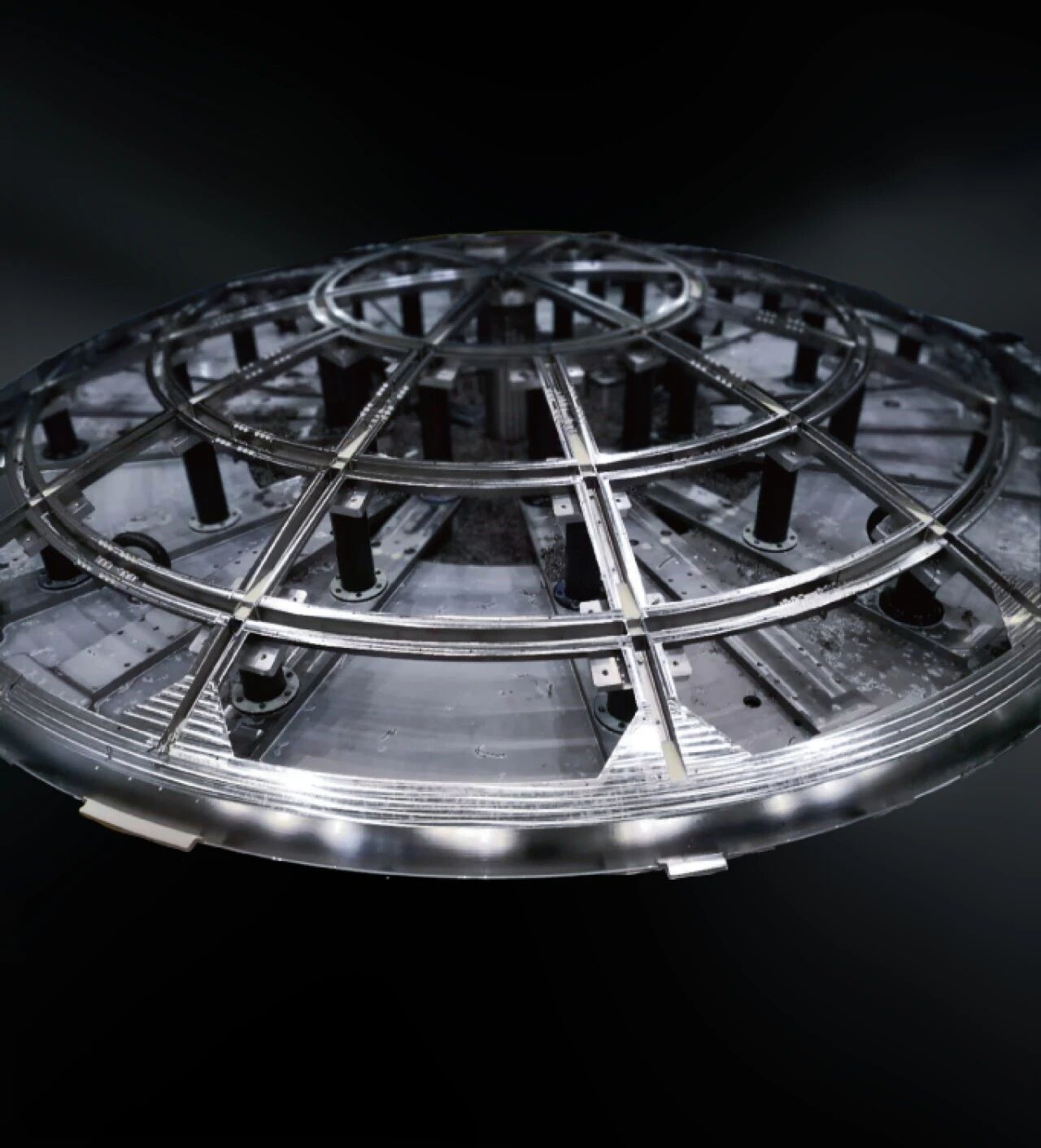
TSC Metal 3D Printing Equipment and Technology have undergone multiple tests in major national projects. In the new-generation manned spacecraft test vehicle project, the LiM-S2510 laser near-net-shaping equipment was used to print the 3.95m diameter return capsule heat shield bottom frame, solving the problem of "deformation and cracking" of large-scale integral components. The material utilization rate was increased by 67%, and the manufacturing accuracy and production efficiency were significantly improved.
During the "Tianwen-1" mission development process, the LiM-X series laser selective melting equipment manufactured and delivered more than 30 products, and the LiM-S series laser near-net-shaping equipment manufactured and delivered 9 products.
Printing various key components for the YF-75DA engine of the core second stage of the Changzheng-8A carrier rocket.
The production of the front and middle fuselage components for a certain aircraft involves complex overall structure, large size, high precision requirements, numerous key positions, and great processing difficulty. In actual manufacturing, the fuselage is divided into three section structures and two frame beam structures for manufacturing and then connected. Plate beam type parts are manufactured using the method of plate + laser deposition, optimizing the forming scanning strategy to reduce the unit heat input, and increasing chamfers in areas with significant cross-sectional changes to reduce stress concentration, ensuring the forming quality.
These technical capabilities honed for national tasks are now being fully released to the commercial aerospace field. Facing the innovative curtain of the entire commercial aerospace industry chain "stars, rockets, launch sites, tests, and uses", TSC will continue to provide diversified metal 3D printing overall solutions with stable and reliable equipment and iterative upgraded processes, converting complex and demanding aerospace requirements into high-quality and efficient regular manufacturing capabilities, and injecting more powerful forces into the pursuit of flying in the sky.
