

The core components of aircraft engines and gas turbines (referred to as "two machines") need to operate for a long time in extremely harsh environments of high temperature, high pressure and high corrosion, and have nearly strict requirements for structural design, material properties, and manufacturing accuracy. The traditional manufacturing methods involve processes such as mold opening, casting, welding, and assembly, each of which may cause accuracy errors and efficiency bottlenecks, leading to complex structures that are difficult to process, low material utilization rates, and long production cycles for the research and development and production of "two machines". The emergence of metal 3D printing technology has injected intelligent manufacturing momentum into the "two machines" field, making it possible to rapidly form complex structures, conduct low-cost verification of design iterations, and achieving these goals in a more efficient manner.
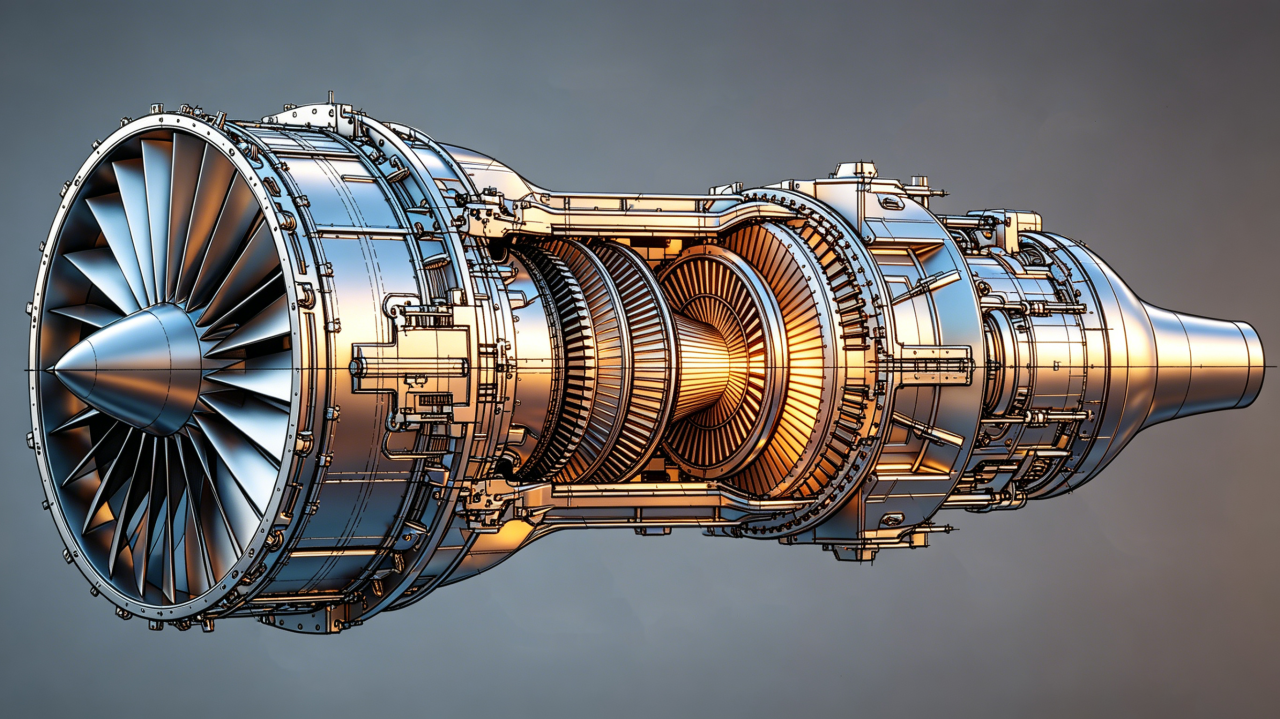
Illustration
TSC has been deeply engaged in metal 3D printing technology for many years. It has developed mature solutions for manufacturing components in the "two aircraft" sector, using its self-developed equipment, full-process technology, and rich production experience to provide users with comprehensive technical and engineering support tailored to their varying needs.
Integrated forming of complex structures, breaking through design limits
The core components of "two aircraft" require higher levels of lightweighting. During the design stage, through topology optimization algorithms and structural designs such as honeycomb, lattice, and thin-walled structures, redundant materials are significantly reduced while maintaining performance and strength. Traditional processes can only be segmented for manufacturing and welded together, which not only involves cumbersome procedures but also makes weld seams the weak points of the structure, prone to failure under extreme conditions.
TSC, leveraging its years of technical accumulation, can assist users in optimizing key components' structures, achieving weight reduction, simplifying the number of parts, and enhancing overall performance. In terms of process simulation, it has established a rich database of processes, effectively reducing the trial-and-error risks of complex components; in production manufacturing, relying on its self-developed LiM-X series equipment, it directly forms large-sized and complex-structured components, eliminating stress hazards from weld seams and significantly enhancing the structural strength and reliability of the components.
Precise adaptation of high-performance materials, laying a solid foundation for performance
“The heat-end components of "two aircraft" must withstand extreme environments such as high temperatures, gas corrosion, and alternating loads. Materials must possess excellent high-temperature resistance, creep resistance, oxidation resistance, and fatigue resistance. TSC's metal 3D printing solution can cover the aerospace-grade high-performance material system, enabling stable formation of high-temperature alloys, titanium alloys, and copper alloys. At the same time, the company's strong technical team can collaborate with users to develop new material processes and conduct printing verification, meeting more operational requirements.
Matrix of large-sized multi-laser high-quality equipment
TSC LiM-X series SLM equipment offers forming dimensions ranging from 150mm to 2000mm, fully covering the processing needs for both small-sized and ultra-large-sized components. It can handle from single-part trial production to single-batch forming, meeting the requirements for batch production efficiency and consistency.
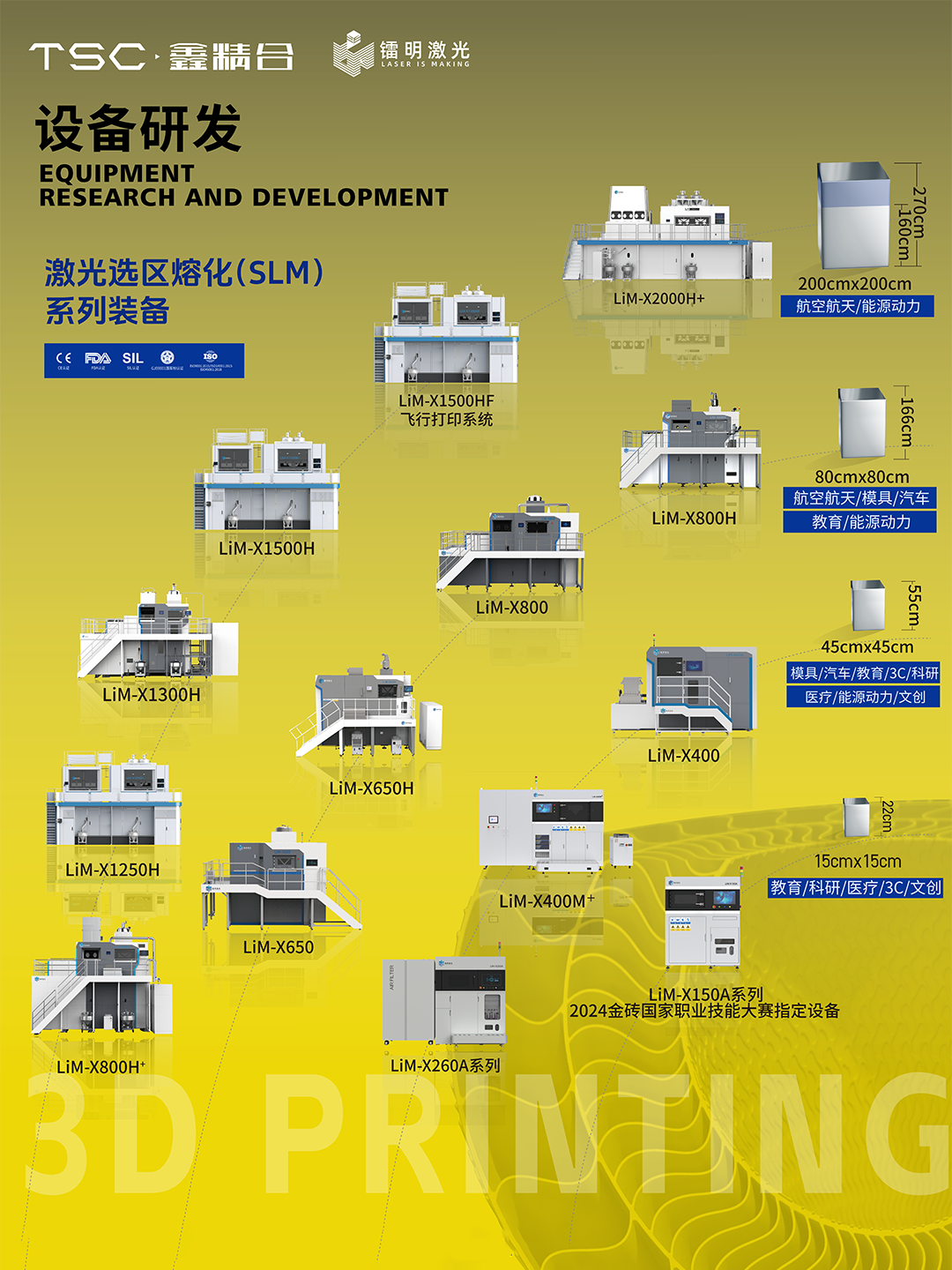
TSC can also provide users with an automated production line solution for metal additive manufacturing, from a single device to an intelligent production line, to build a stable production system.
Two-machine case studies have been mature, verifying the technical strength through practical applications.
TSC has deeply focused on the two-machine field, completing the research and batch delivery of multiple core components for aircraft engines and gas turbines, with rich practical experience.
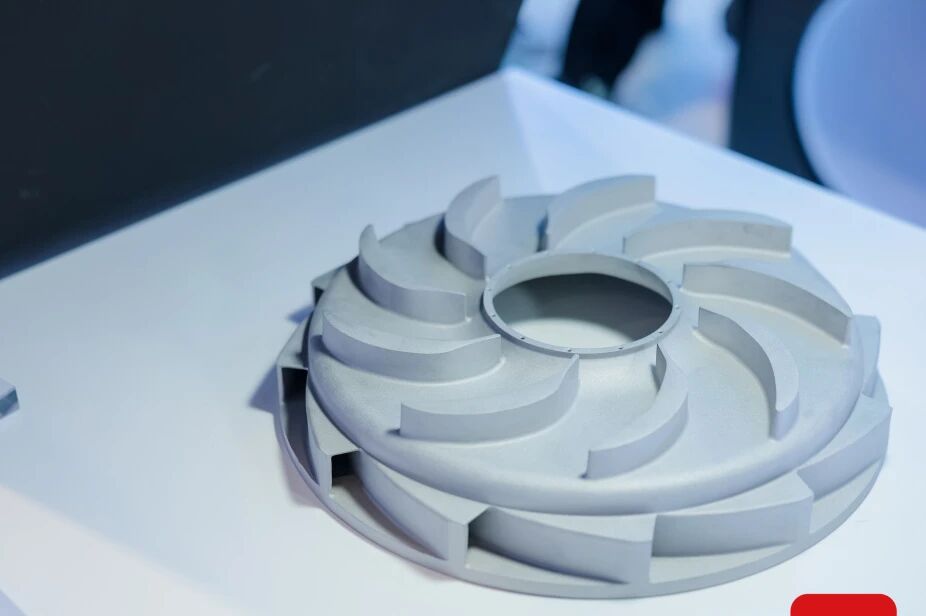
Blade
Exhibition size: approximately 450mm × 450mm × 90mm
Material: Aluminum alloy AlSi10Mg
By leveraging the low-density advantage of aluminum alloy and combining with advanced additive manufacturing processes, the part strength is superior to that of traditional aluminum material parts; with the design advantages of additive manufacturing in lattice, thin-walled, and integrated structures, the weight reduction potential is maximized, significantly promoting the lightweighting of the power system. The surface roughness of the part is Ra3.2~6.3, and after simple post-processing, it can meet the usage requirements.
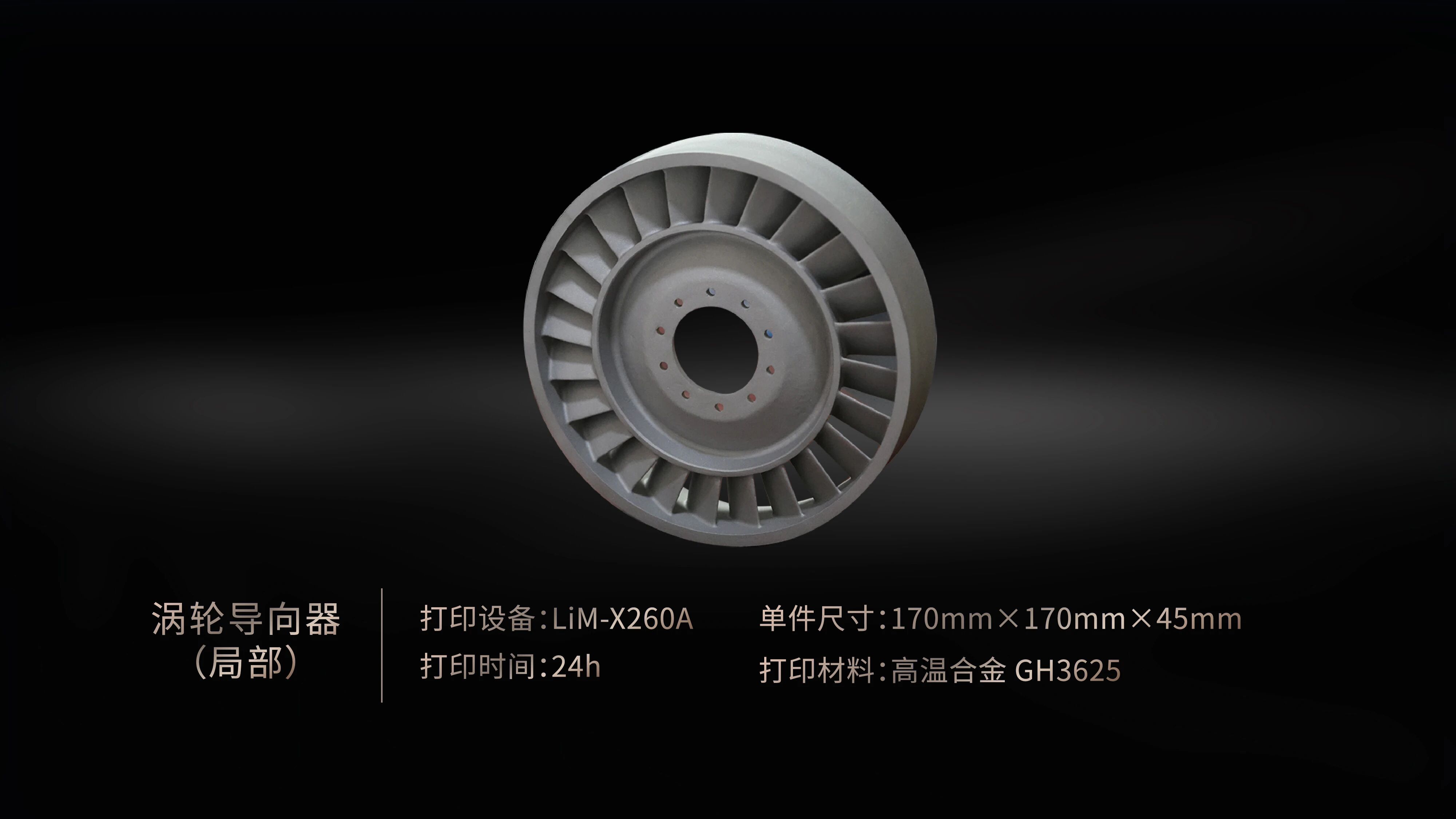
Turbo guide (local part)
Exhibition size: approximately 170mm × 170mm × 45mm
Material: High-temperature alloy GH3625
As an indispensable key component in aircraft engines and gas turbines, it is manufactured using high-temperature-resistant, anti-oxidation, and anti-corrosion high-temperature alloys; the integrated structure of the blade grid ring breaks through the bottleneck of traditional manufacturing processes, simplifies the process, and improves the overall performance.
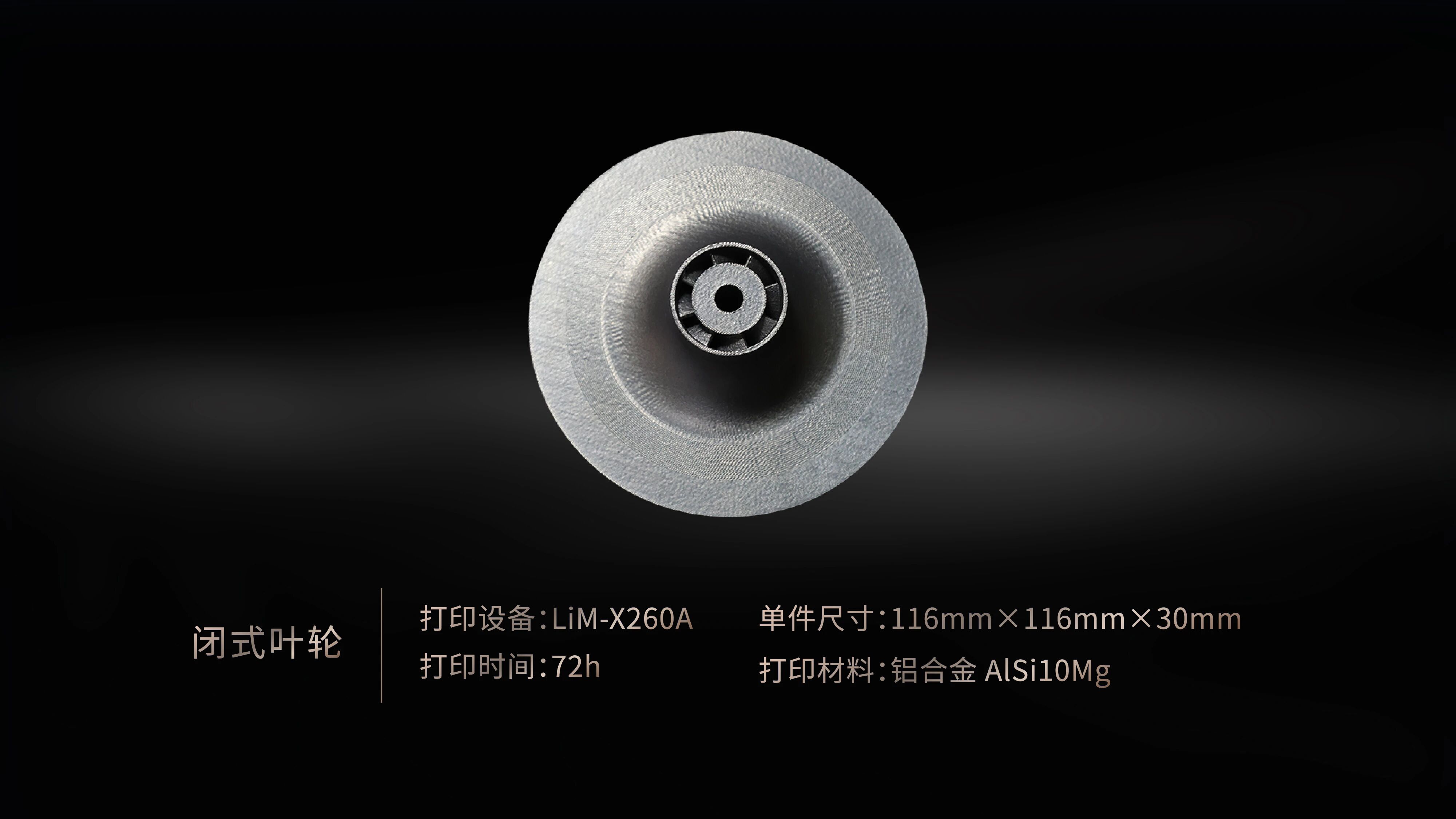
Closed impeller
Exhibition size: approximately 120mm × 120mm × 30mm
Material: Aluminum alloy AlSi10Mg
The closed impeller (with front and rear cover plates for a fully enclosed blade structure) is widely used in centrifugal compressors and high-pressure fuel booster pumps of aircraft engines to achieve high boost ratio and compact structure. The blade angle transition of this exhibit is gentle, ranging from 0° to 25°, and adopts a small-angle unsupported process strategy, resulting in excellent product quality, fully demonstrating TSC's solid manufacturing technical level.
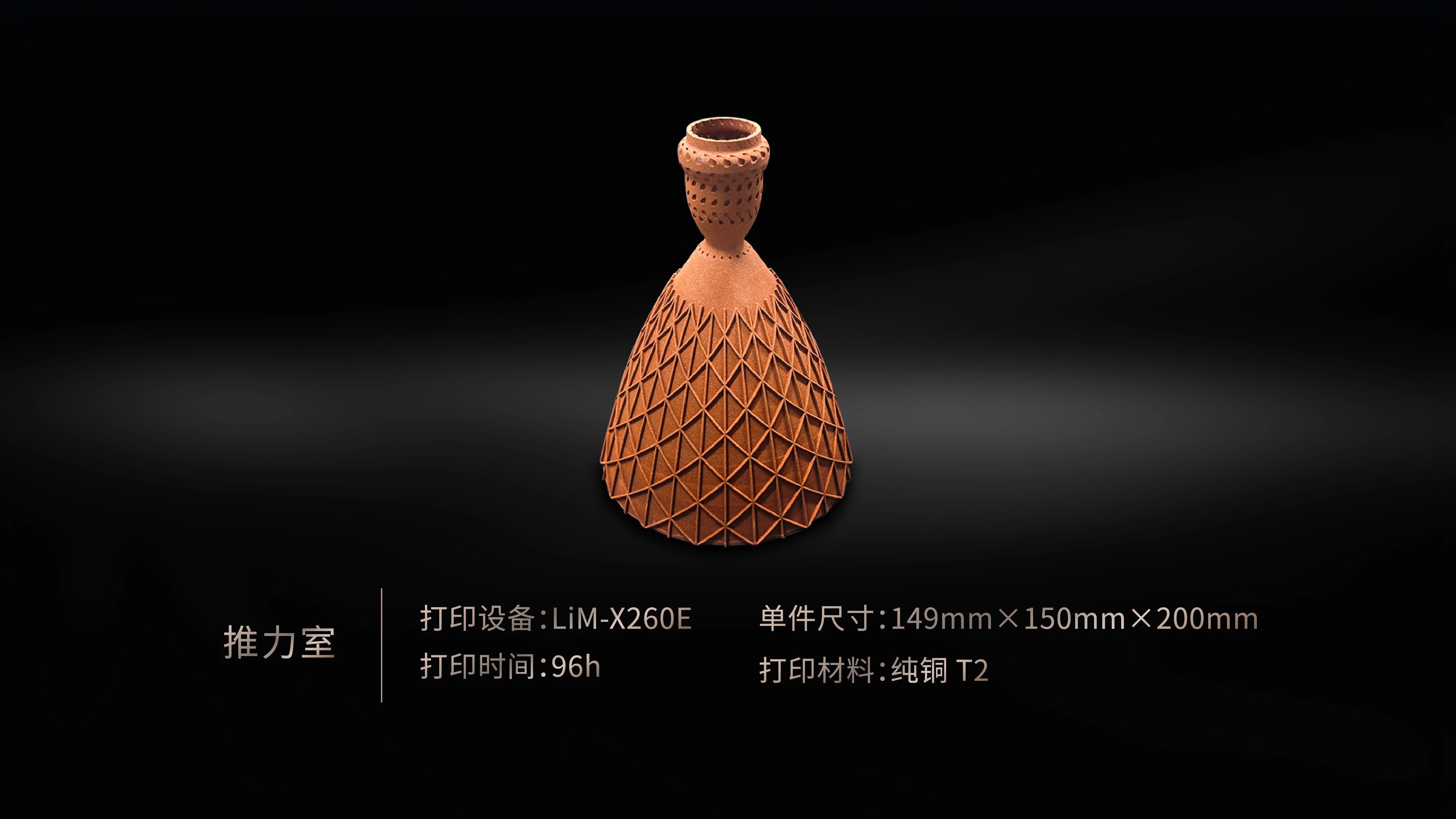
Thrust chamber
Exhibition size: approximately 150mm × 150mm × 200mm
Material: Pure copper T2
Metal 3D printing technology can significantly simplify the manufacturing process of the thrust chamber, reduce subsequent assembly costs, and shorten the research and development cycle. Using pure copper material, its high thermal conductivity can quickly disperse thermal stress and reduce the risk of thermal cracks, especially suitable for transient working conditions.
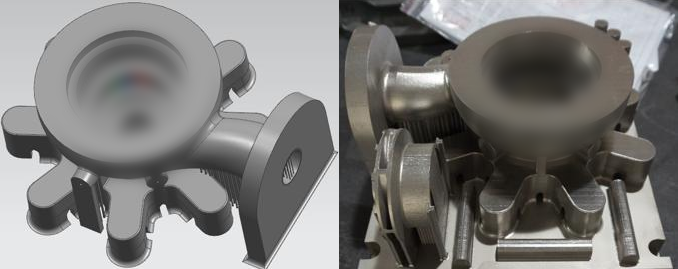
Oxygen pump housing
A component of rocket engine valve body structure, usually completed by casting. As the part structure becomes increasingly complex and the size continues to increase, the metallurgical defects produced by traditional casting processes can no longer meet the usage requirements. Metal 3D printing forming not only solves the problem of difficult casting for complex components but also ensures that the metallurgical structure and mechanical properties of the part meet the design requirements.
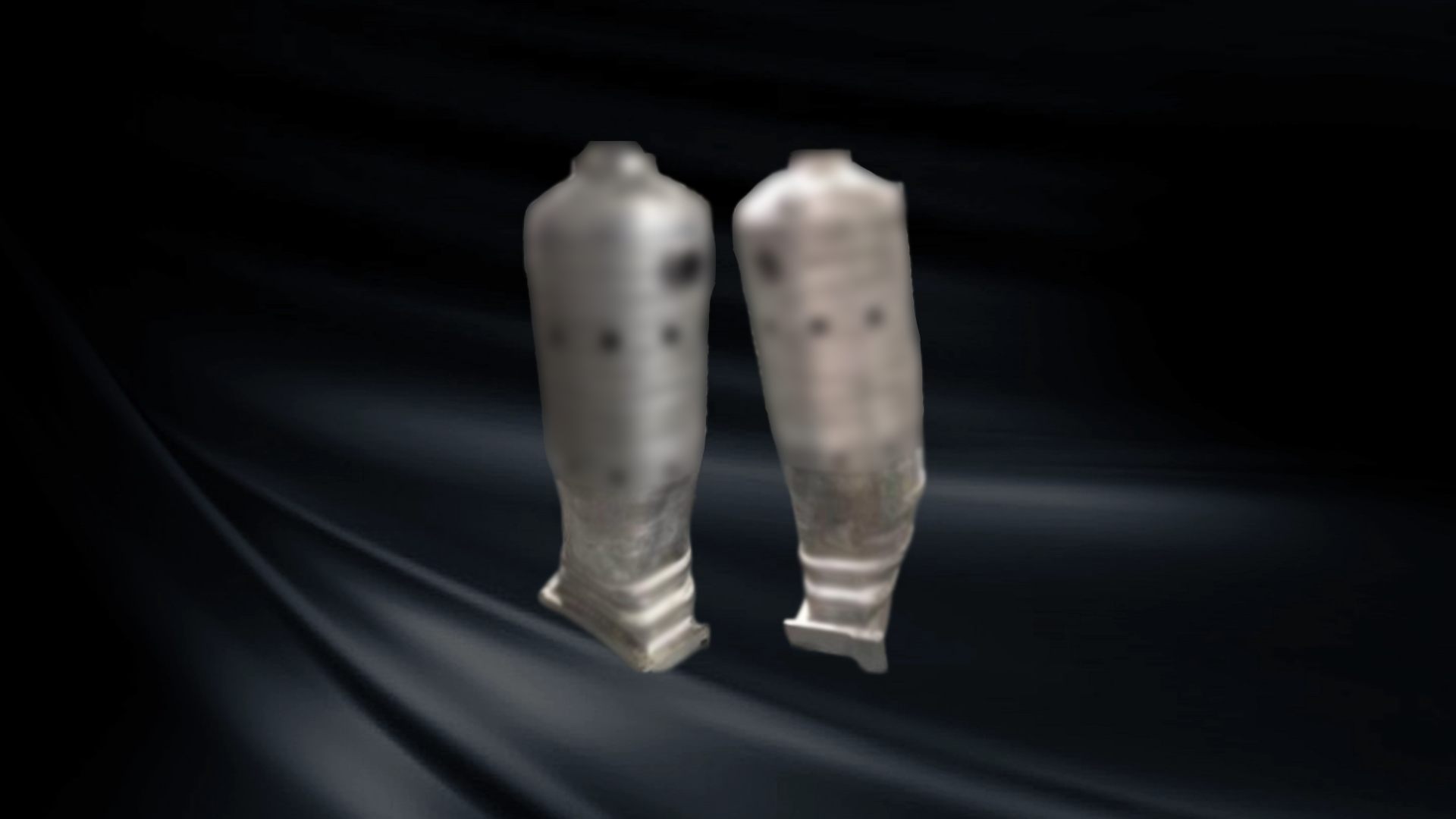
Gas turbine flame tube
The traditional flame tube is assembled by splicing and welding multiple components such as cones, mixers, embedded parts, cooling rings, and seat rings. The process is complex and the production cycle is long. Based on metal additive manufacturing technology, printing titanium alloy flame tubes, integrated printing, integrates the originally need-to-be-welded-assembly cones into one, significantly reducing the welding process, improving product stability, and shortening the production cycle.
The technological breakthroughs in aircraft engines and gas turbines are the core manifestation of the country's high-end equipment manufacturing strength. Metal 3D printing, as a disruptive manufacturing technology, is reshaping the manufacturing logic of the two-machine industry, providing a new path for the research and production of high-performance, lightweight, and long-life components. TSC will continue to uphold the concept of innovation-driven development. With self-controlled equipment, stable and reliable processes, and professional and efficient services, it will continuously promote the in-depth application of metal 3D printing technology in the "two-machine" fields. With lighter structures, stronger performance, and faster speeds, it will help accelerate the development of China's aircraft engine and gas turbine industry chains.
